

The background to the CAMPARI case – a well-known trade mark in practice
Davide Campari-Milano N.V. is an international spirits and wine group, known under the name Campari Group. The company was founded in Milan in 1860 and is today among Italy’s leading producers of alcoholic and non-alcoholic beverages, with operations and distribution across large parts of the world. The group’s most famous product is CAMPARI, an iconic liqueur with a distinctive red colour and taste.
The case arose when Campari Group became aware that another company had obtained registration in Norway for a combined trade mark containing the word CAMPARI. The registration did not cover alcoholic beverages, but included, among other things, toothpaste, cosmetics and shampoo. Although these are goods of a different nature from those traditionally associated with CAMPARI, Campari Group wished to protect the strong brand identity and the associations represented by its trade mark.
Campari Group therefore contacted Håmsø Patent Agency for assistance in enforcing its rights. On behalf of Campari Group, we filed an opposition with the Norwegian Industrial Property Office, arguing that CAMPARI qualifies as a well-known trade mark. The Office upheld the opposition in full, and the contested trade mark was cancelled.
This outcome demonstrates how a well-known trade mark can provide effective protection even outside the core area of the trade mark’s registered goods.
To understand the scope of this protection, we first take a closer look at the general rules governing trade marks – and at what specifically characterises well-known trade marks.
The general rule in trade mark law
The basic principle of trade mark law is that a trade mark is protected in relation to the goods and services for which it is registered. This means that, in principle, others may use the same or a similar mark for entirely different products, provided there is no risk of confusion for the relevant public.
In Norway, there are several examples of identical or similar signs being used side by side for different goods and services. The trade mark SAGA is used in parallel by various independent parties, including Saga Funeral Services, Saga Mobile and DNB’s customer programme Saga. Although the names are identical, they relate to different types of services and target different audiences. Consumers therefore do not expect any commercial connection, and the marks can coexist without difficulty.
Extended protection for well-known trade marks under the Trade Marks Act
Where a trade mark is known by a significant part of the relevant public, the Trade Marks Act may grant it extended protection, cf. section 4, second paragraph. For trade marks that are well known in Norway, this means that others may not use identical or similar signs in the course of trade – even for goods or services of the same or a different kind – if such use, without due cause, would result in unfair advantage being taken of, or detriment to, the distinctive character or reputation of the well-known trade mark, often referred to as goodwill. Protection under this provision is reserved for trade marks whose goodwill value is out of the ordinary.
This means that the law not only protects against confusion, but also against others taking advantage of, or weakening, the value built up around a well-known trade mark. The provision is therefore intended to prevent others from free-riding on the efforts and investments behind the development of a well-known brand.
How the rules on well-known trade marks were applied in the CAMPARI case
In the CAMPARI case, it was not sufficient merely to rely on the fact that the trade mark is registered for alcoholic beverages. In order to obtain protection under the rules on well-known trade marks, it had to be demonstrated that CAMPARI holds such a position and level of distinctiveness that it is entitled to extended protection under section 4, second paragraph of the Trade Marks Act.
In the opposition, Håmsø Patent Agency therefore placed considerable emphasis on documenting CAMPARI’s position in the Norwegian market over time. Extensive evidence was submitted demonstrating the mark’s long history, continuous use and high visibility in Norway, including sales figures and references in media and encyclopaedias. This documentation was submitted to substantiate that CAMPARI is a well-known trade mark entitled to extended protection.
On the basis of the evidence submitted, the Norwegian Industrial Property Office concluded that the word mark CAMPARI is well known. The Office further found that the contested mark and CAMPARI are similar.
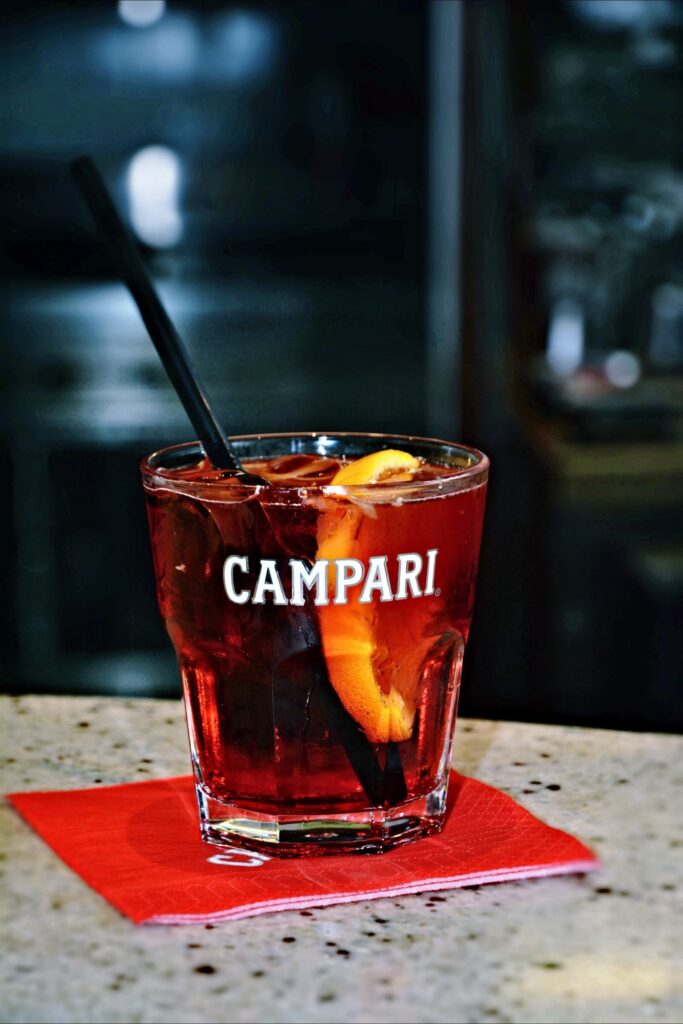
NIPO then stated that alcoholic beverages and goods such as shampoo, cosmetics and toothpaste are clearly goods “of a different kind”. The decisive question was whether use of the later mark would nevertheless be capable of triggering an association with the well-known mark in the mind of the average consumer. On this point, the Office agreed with Håmsø Patent Agency’s arguments. It was emphasised that CAMPARI is used for a drink with a highly distinctive red colour and taste. These are characteristics that are also relevant for a range of cosmetic products, toothpaste and mouthwash. NIPO further referred to evidence we had submitted showing a trend whereby make-up and aesthetics are adapted to specific drinks. In addition, it was emphasised that CAMPARI has no linguistic meaning and therefore appears as a highly distinctive trade mark.
On this basis, NIPO concluded that use of the later mark, which the proprietor sought to register for various personal care and cosmetic products, would create an association with the well-known trade mark CAMPARI.
NIPO further assessed the effects of such an association. It was held that the use could both cause detriment to the distinctive character of the well-known trade mark and constitute unfair advantage being taken of CAMPARI’s reputation and distinctiveness. Consumers could form new associations with the mark, which over time would weaken its ability to identify the proprietor’s goods. This would in turn reduce CAMPARI’s eye-catching effect and lead to dilution of its strong brand identity.
NIPO also agreed that the association would amount to a form of “free-riding”, as the later mark would exploit the goodwill and visual appeal that CAMPARI has built up over more than 150 years. The relationship between the goods and the use of the well-known mark could give the relevant public the impression of a commercial connection, thereby transferring CAMPARI’s image and reputation to the later mark.
Summary
CAMPARI is a clear example of how strong trade marks require active protection. Where value, reputation and distinctiveness are at stake, it is crucial to safeguard the rights and brand value built up over time.
Do you need assistance with registering or protecting your trade mark? Or would you like us to monitor whether similar trade marks may infringe your rights? We offer a non-binding initial assessment and help you secure the value of your brand. Please contact us for further information.
Would you like to read the full decision? You can find it here: NIPOs Decision
If you would like to learn more about trade marks, you may also read our article on Zalo and the value of acquired distinctiveness here: Acquired distinctiveness of trademarks – when a single drop is enough